Google changed its privacy policy on October 16, 2026, and the update drew wide attention last week. The Google privacy policy on Gmail ads still says Google doesn’t show personalized ads based on your content from Drive, Gmail or Google Photos. It now adds an exception: unless you choose to make that data available to other Google services that support personalized ads.
That exception covers Personal Intelligence, the opt-in feature that lets Gemini and AI Mode in Search read connected apps such as Gmail and Photos. The policy now says Search “may process some of the data that you allow Search to access to personalize content, including ads.”
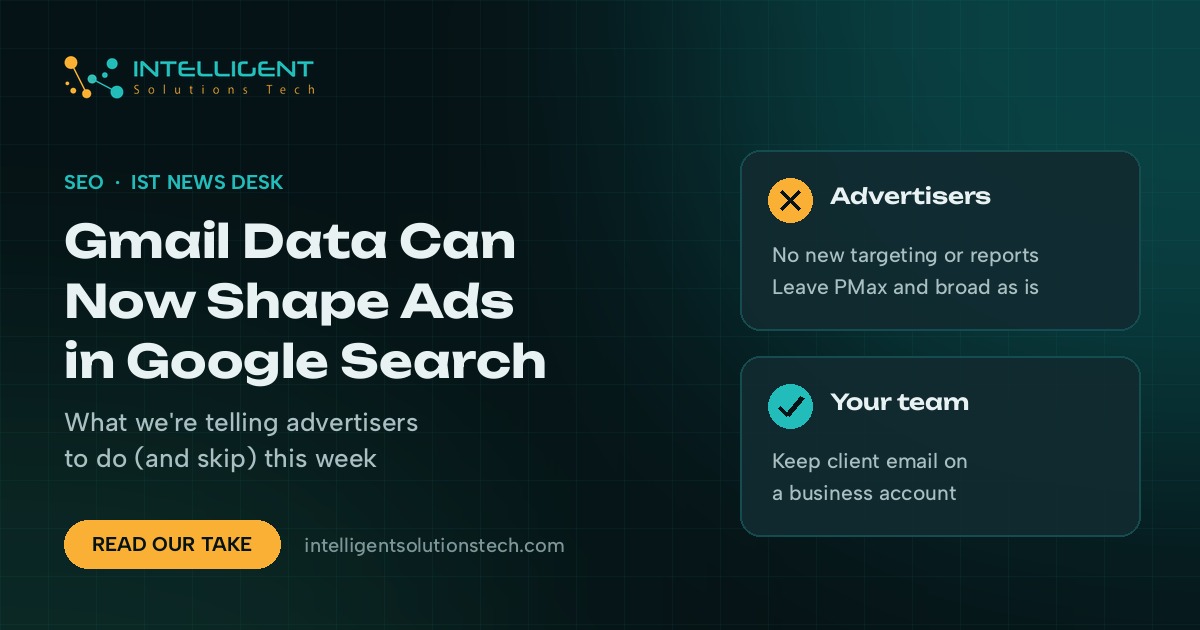
Our view for advertisers: this is a privacy story first and a targeting story second. Nothing new appears in Google Ads. There’s no audience to buy and no setting to change, so we’d leave campaigns as they are and put the hours into landing pages and product feeds instead.
What changed
- The new policy took effect October 16, replacing the October 1 version. It adds the carve-out to the Drive, Gmail and Photos ad pledge, plus a line that connected data can personalize Search content, including ads.
- PPC Land compared the two versions and found the sensitive-category rule unchanged. Google still says it won’t personalize ads on categories such as health or religion, and it doesn’t share personally identifying information with advertisers.
- Search Engine Journal reports Google started testing ads in AI Mode for people with Personal Intelligence turned on around the same date. Eligible campaigns are Performance Max, Shopping, and Search campaigns using broad match, including AI Max for Search.
- Per the same report, Google hasn’t announced new targeting options, audience segments or reporting for the test. Search term, asset and landing page reports don’t show whether Gmail or Photos signals played a part.
- Personal Intelligence is opt-in. The Hacker News reports the beta is open to eligible users 18 and over, except in the European Economic Area, Switzerland, the UK and Nigeria.
Google’s Search Help page on Personalized Recommendations says those settings apply across Search, Maps, Shopping, Flights, Hotels, Translate and News, and that anyone can switch them off in their Google Account.
What it means for your business
There are two sides to this, and most small business owners sit on both. You buy ads on Google, and you or your staff use Google accounts that may hold customer email.
As an advertiser. If you run Performance Max, Shopping or broad match Search, some of your ads may already be showing in AI Mode to people who connected their apps. You can’t target that group directly, and you can’t exclude it. The signal sits inside Google’s matching, the same way broad match and Performance Max already use signals you never see. We don’t expect a visible jump in results, and with no reporting there’s no fair way to measure one yet.
Where your buyers live matters. Campaigns aimed at the UK or the EU look unaffected for now, since the beta reportedly isn’t open there. Campaigns aimed at the US, Canada and Australia can reach people who opted in.
As a Google user. The opt-in is made person by person. If someone on your team turned on Personal Intelligence on a personal Google account that also holds client conversations, those emails can now inform the ads that person sees in Search. Google says advertisers never get access to inbox content, and we have no reason to doubt that. It’s still a poor place to keep client email. Search Engine Journal notes the January launch was limited to personal accounts and left out Google Workspace business accounts, which is one more reason to keep client work on a business account.
For context on how AI Mode already changes clicks, see our take on Google adding more links to AI Mode and AI Overviews.
What we’d do this week
- Leave campaigns alone. Don’t restructure Performance Max or broad match campaigns because of this test. There’s no new lever to pull, and big changes this close to Black Friday cost more than they return.
- Read your search terms. Check the search terms report in broad match and AI Max campaigns for queries that look out of place, and add negatives the way you normally would.
- Fix the pages AI Mode sends people to. AI Mode questions tend to be longer and more specific. Make sure your top product and service pages answer them plainly, with current stock, delivery times and return terms.
- Move client email off personal accounts. If anyone handles customer conversations in a personal Gmail, move that to Google Workspace or another business mailbox this month.
- Show your team the switches. Ad personalization lives in My Ad Center. Search personalization can be turned off at google.com/search-personalization, and connected apps can be disconnected in Personal Intelligence settings.
We’ll post an update if Google adds reporting or controls for advertisers. If you’re setting budgets for the holidays, our notes on Google Ads customer lifecycle goals are worth a read too.
Want a second pair of eyes on your Performance Max and broad match setup before peak season? Our PPC management team starts every engagement with a free audit.