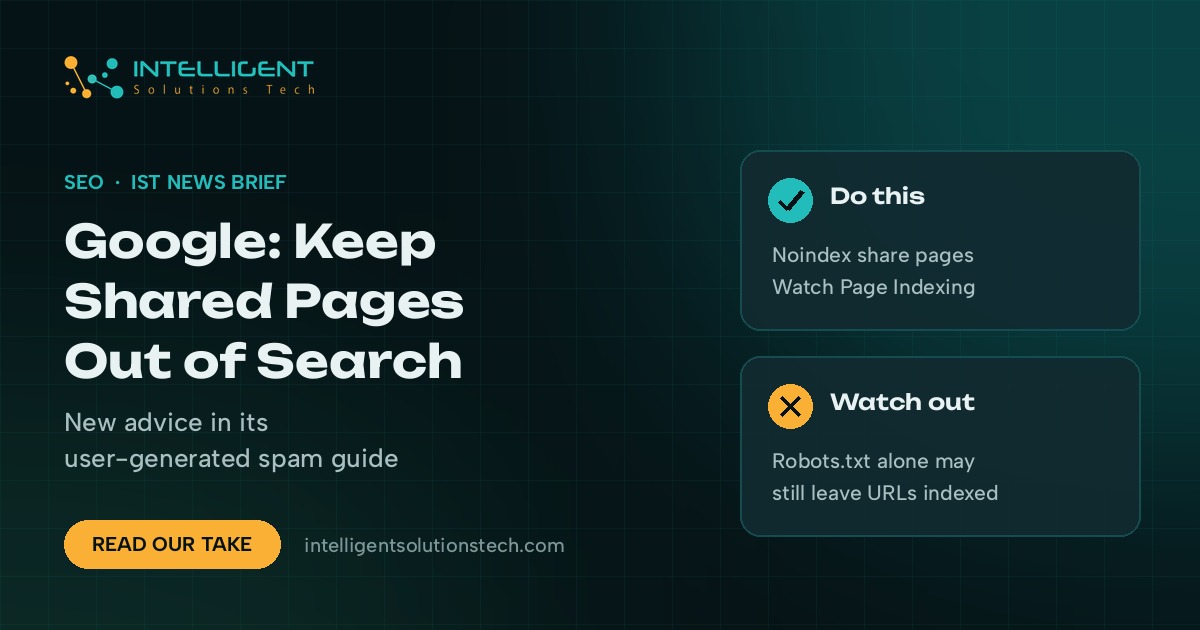
Google updated its Prevent user-generated spam help document on October 26, 2026, according to the Google Search Central updates log. The guide now covers tools that let people publish shared pages, generated content or web apps, and a new section tells those platforms to keep link-shared pages out of the index by default.
What’s new
- Wider scope. Google now names hosting platforms and tools that let users publish shared pages, generated outputs or web apps as open to abuse by spammers.
- “Only index content meant for Search.” Platforms should decide whether user-created content should be found in search or reached only by people with the link. For pages made for sharing, collaboration or utility, Google recommends a noindex robots meta tag or X-Robots-Tag header, or blocking crawling in robots.txt, by default.
- Monitoring. Google asks site owners to verify in Search Console and watch the Page Indexing and Search performance reports for sudden jumps in indexed pages, impressions or queries.
One detail matters in practice. Google’s robots.txt documentation says a blocked URL can still end up indexed if other pages link to it, and a crawler can’t see a noindex tag on a page it isn’t allowed to fetch. For pages already in the index, noindex is the cleaner fix.
Who it affects
Any site that turns user input into a public URL. Think quote builders, shared carts, AI tool outputs, form result pages, public profiles, forums and client portals with share links. A typical brochure site for a local business, with service pages and a blog, has nothing to change. Ecommerce stores should check one thing: whether wishlist or shared-cart links create indexable URLs.
Our take
This is a guidance update. Google hasn’t announced a new spam update, so there’s no reason for alarm. If your site creates pages from user input, check Search Console this week for indexed URLs you didn’t expect, and add noindex to share and result pages before they pile up. Our technical SEO audit checklist covers how to spot index bloat, and we recapped Google’s last spam update in this post.
Want a second pair of eyes on your index? Our technical SEO team can audit it for you.