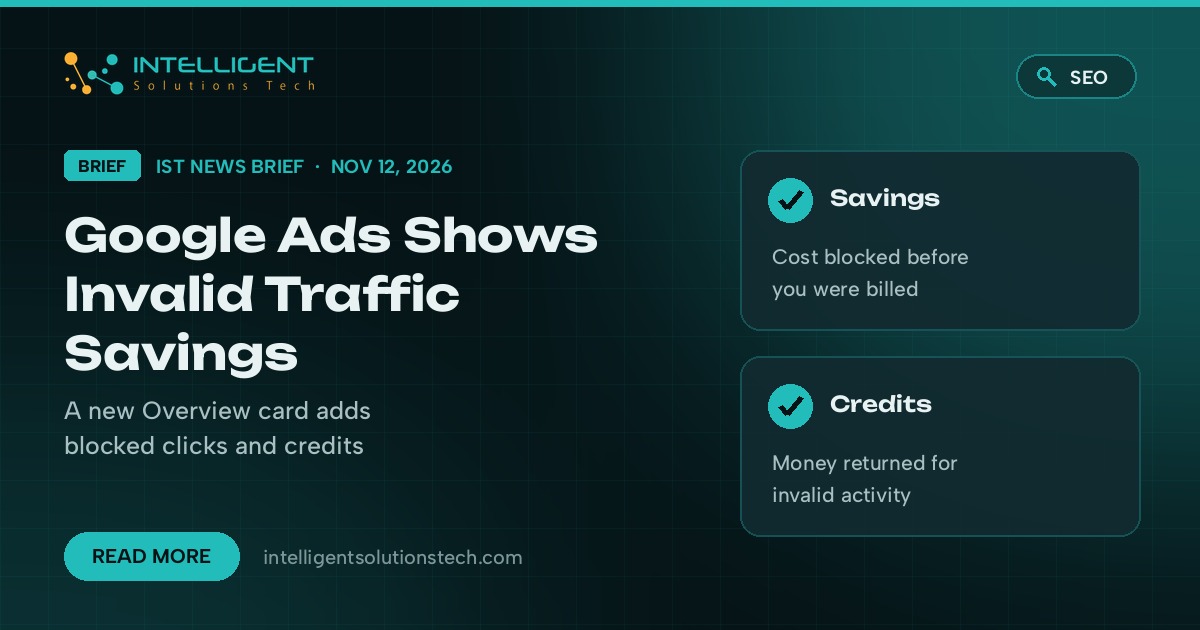
Google announced on November 12, 2026 that it’s rolling out an Invalid Traffic Overview Card in Google Ads. Keerat Sharma, Google’s VP and General Manager for Ads Privacy and Safety, wrote on the Google blog that the card shows advertisers two numbers in one place for the first time: what Google’s filters kept off their bill, and what it credited back for invalid activity it caught later.
What’s new
The card sits on the Overview page under the Campaigns menu and is labeled “Invalid traffic.” According to the updated Google Ads help article, it reports two figures for whatever date range you pick:
- Estimated savings: Google’s estimate of the cost its automated protections blocked before you were billed.
- Credited cost: money returned to you for invalid activity found after a billing period closed.
A View details link opens daily graphs, a breakdown across all campaigns, and links to the invoices that carry each credit. Google says the card is rolling out gradually, so it may not show up in every account yet. In the same post, Google said it has cut advertiser exposure to invalid leads by an average of 30% so far in 2026.
Who it affects
Every business running Google Ads, though small accounts with tight budgets will feel it most. Invalid clicks and junk form fills hit lead generation campaigns hardest, and until now the evidence was spread across the Invalid clicks column, the Billing summary and the Invalid Activity Credit Report. The new card pulls the headline numbers together. It doesn’t change how Google detects or bills invalid traffic, and the credit report still matters because credits don’t rewrite your campaign data after the fact.
Our take
We like this one because it’s a reporting change that costs nothing and answers a question advertisers ask all the time: am I paying for bot clicks? Once the card appears in your account, set the range to the last 90 days and note both numbers. If credited cost is a large share of spend for one campaign, look at its placements, locations and lead form quality before raising its budget. And keep your own checks on form submissions, since Google’s figures only cover what Google caught.
If you’d like a second pair of eyes on your account, our PPC management team can review where your spend is going, starting with a free audit. You can read Google’s announcement on the Google blog, and our note on Google’s AI labels for California ads covers another recent Google Ads change.