Local citation building is the work of getting your business name, address, phone number and website listed the same way on the directories, map apps and data sources that search engines and AI assistants read. It still matters in 2026. Far fewer directories earn their place than the long lists sold by citation vendors suggest, though. A clean, consistent set of listings on the sites people and platforms actually use beats hundreds of submissions to directories nobody visits.
Google says local results come down to relevance, distance and prominence, and its own help page lists directories among the sources it uses to judge how prominent a business is. Citations won’t lift a weak profile into the map pack by themselves. They confirm that your business is real, where it is and how to reach it, and they stop wrong data from spreading.
Below is the short list we work from for businesses in the US, Canada, the UK and Australia, the order we build listings in, and how we keep them clean once they’re live.
What counts as a local citation
A citation is any online mention of your business name, address and phone number, usually shortened to NAP. Structured citations sit in directory profiles that have a field for each detail. Unstructured citations show up in news stories, blog posts, chamber of commerce member lists, sponsor pages and event listings.
Both kinds help. Structured listings are the ones you can claim and edit, and some of them feed data to other platforms, so that’s where citation work starts. Unstructured mentions come later, mostly from real local activity.
Why local citation building still matters
Some people wrote citations off years ago. We still see them do four jobs.
- Map apps pull from them. Apple Maps, Bing, ride-hailing apps and in-car navigation draw business details from their own listing tools and from data providers. A wrong phone number in one source can resurface somewhere you never edited.
- AI assistants repeat them. When ChatGPT, Gemini or Google’s AI Overviews suggest a local business, they draw on what’s written about it across the web. Matching details in many places make your business easier to trust and quote correctly.
- Some directories still send customers. Yelp, the Better Business Bureau, Nextdoor and trade sites like Angi and Houzz bring real calls in certain industries.
- They back up your Google profile. Conflicting addresses and hours across the web send mixed signals. When a profile keeps getting changed by user suggestions, inconsistent listings elsewhere are one of the first things we check.
The directories that still matter in 2026
We sort directories into tiers and work top down. Most small businesses never need to go past the third tier.
Tier 1: platforms every business needs
- Google Business Profile. The anchor for everything else. Every other listing should match it. Our guide to Google Business Profile categories covers the field that trips up most owners.
- Apple Business Connect. Controls how you appear in Apple Maps, Siri and Spotlight search on iPhones and Macs.
- Bing Places for Business. Feeds Bing search and Microsoft products, and you can import your Google profile to set it up quickly.
- Facebook business page. Many customers check it for hours and recent activity, and it’s often one of the first results for a brand search.
- Yelp. Important for restaurants, salons, home services and professional firms in the US and Canada.
Tier 2: data providers
In the US, a small group of data companies supply business listings to maps, apps and smaller directories. Data Axle and Foursquare are two of the best known. Correcting your record at the source fixes many downstream listings over time, which is far less work than chasing every small site by hand.
Tier 3: country directories
Each market has its own handful of general directories that still get traffic and get copied by other sites.
| Market | Directories worth claiming |
|---|---|
| United States | Better Business Bureau, Nextdoor, Yellow Pages (yp.com), Manta, your local chamber of commerce |
| Canada | Yellow Pages Canada, Canada411, Better Business Bureau, your local chamber of commerce |
| United Kingdom | Yell, FreeIndex, Checkatrade or TrustATrader for trades, your local chamber of commerce |
| Australia | Yellow Pages, Hotfrog, hipages for trades, your local chamber of commerce |
Tier 4: industry directories
These often matter more than any general directory because buyers search them directly. Lawyers should be on Avvo, Justia and FindLaw. Medical practices need Healthgrades and Zocdoc in the US. Home service businesses do well on Angi, Houzz and Thumbtack. Hotels and restaurants need Tripadvisor. Accountants should check their professional body and state society listings.
Local sources
Chamber of commerce memberships, business networking groups, local news coverage, sponsorship pages and supplier “find an installer” pages are the citations competitors can’t buy. They take longer to earn, and they tend to carry the most weight.
Which directories to skip
Most of the work in citation building is deciding what not to do. We pass on the following.
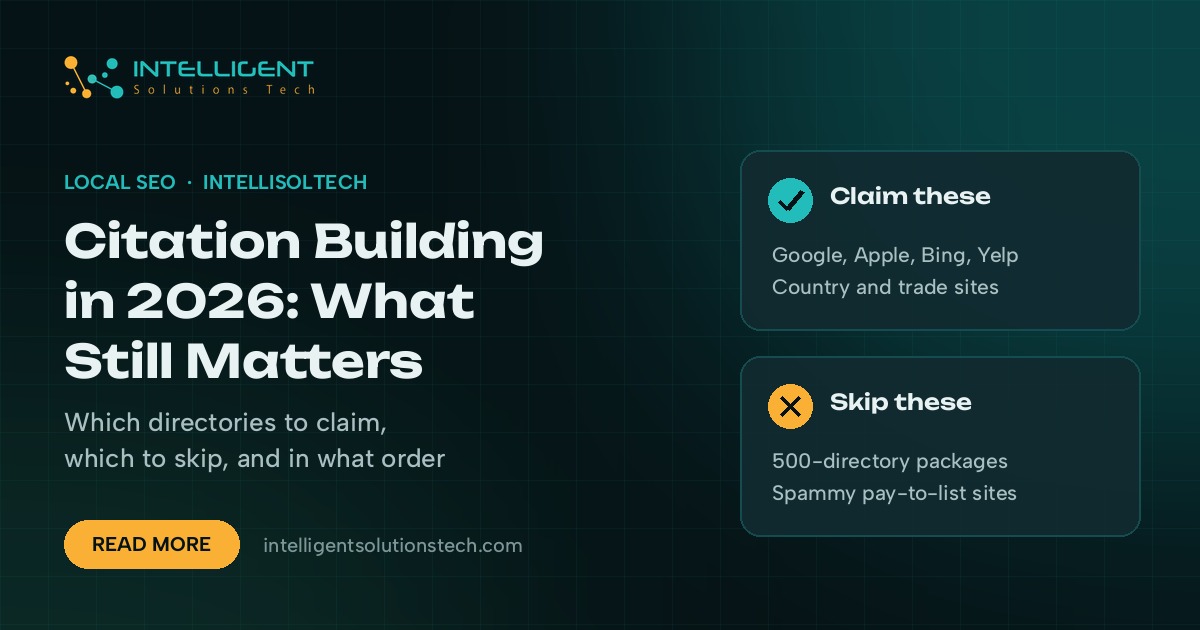
- Directories that accept any listing for a fee, with no traffic and no editorial check.
- Sites full of spam listings, broken pages or obvious scraped data.
- “Submit to 500 directories” packages. They mostly reach low-quality sites and leave duplicate listings you can’t remove later.
- Paid premium listings, unless call tracking shows they bring leads. A paid badge doesn’t improve your citation, it just costs money each year.
How to build citations in the right order
Order matters because the early listings get copied by the later ones. Here’s the sequence we follow.
- Lock your NAP. Pick one exact format for your business name, address, phone and website, and match your Google profile. Decide how you write suite numbers and abbreviations, and use your main local number, not a tracking number.
- Audit what already exists. Search your business name, phone number and any old addresses. Tools like BrightLocal, Whitespark and Moz Local can scan the major sites and list mismatches.
- Fix Tier 1 first. Google, Apple, Bing, Facebook and Yelp get corrected before anything else.
- Correct the data providers. Update your record with the main data companies so downstream sites pick up the right details.
- Add country and industry directories. Work through the short list for your market and trade.
- Claim, don’t just submit. Verify ownership of each listing so you can edit it later and get alerts when someone suggests a change.
- Fill every profile out. Add categories, hours, a real description, photos and your service area. Half-empty listings look abandoned.
- Log everything. Keep a sheet with each URL, the login email, the date it went live and its status.
Service-area businesses, moves and rebrands
If you work at customers’ locations and hide your address on Google, hide it on other directories too where they allow it. Some directories require a street address to publish a listing. Skip those rather than listing a mailbox or virtual office, which breaks Google’s guidelines and can cause problems for your profile.
Moves, new phone numbers and name changes are where citations go wrong. Update Tier 1 first, then the data providers, then the rest. Old data can linger on smaller sites for months, so keep your old number forwarding for a while and recheck the listings that rank for your brand name.
Keeping citations clean over time
- Check your top 15 to 20 listings every quarter, and after any change to hours, phone or address.
- Watch for duplicates after a rebrand or a move, and merge or remove them through each site’s support process.
- Turn on review and edit notifications for every claimed listing so you see changes when they happen.
- Register logins with an email the business owns, not a staff member’s or an agency’s personal address. You keep control if people leave.
How long citations take to show results
Changes on Google, Apple and Bing usually appear within days to a few weeks. Updates through data providers take longer to filter down to smaller sites. Citations rarely cause a jump in rankings on their own. They do their job alongside a well-built Google profile, steady reviews and strong service and area pages.
A good sign you’re done is boring consistency: search your business name and phone number, and every result shows the same details.
Get your listings cleaned up
If your listings are a mess after a move, a rebrand or years of agency changes, our team can audit and fix them as part of a monthly local SEO services program, priced after a free audit. We often pair it with Google Business Profile management, and agencies can hand the same work to us under their own brand through white label local SEO.